Wednesday, April 3, 2013

V P MANOHARAN


V P Manoharan has left us. Who was Manoharan to us, gramers? He was indeed a good friend with a substantial potential for storytelling. In the eighties when he along with Sathish Babu, Payyanur started a difficult carrier at literature, almost everyone was sure that he is destined to be the number one in storytelling and will rise above the confines of gramam. He did excellent job writing some 100 plus stories and some screen plays. He has to his credit five collected volumes. He has penned enough literature to be equated with the established writers of our times. But Manoharan remained anonymous as a writer even among his friends. He was reluctant to discuss his stories even with friends. He used to frequent kovval very often in the past. He used to take part in the unending discussions on evenings. He was an introvert and never took pains to acquaint with strangers. After he got promotion as an Officer his creative spirit  was on the decline but still exceptionally good stories appeared occasionally. His stories appeared in kalakoumudi, Deshabhimani, kadha and almost all magazines of repute.  But Manoharan was reluctant to project himself as a literary figure. He always withdrew from the lime light. As an officer of Sales tax, he preferred to be posted in Kasaragod as some of his limited friends in the literary world were in Kasaragod. As time passed, he seldom visited Kovval and he got a good audience at Sarga Film Society. He was not attached to film world much but he was accepted in their circle instantly.
          Manoharam, it appears, lacked confidence as a story teller. He longed popularity as any ordinary man but lacked the tactics needed. Thus when time passed his contemporaries gained popularity and he thought he was losing his ground and  altogether stopped writing. For the past few years he did not write a single story and he disliked to discuss the matter. His friends have been expecting a glorious return when all of a sudden he was hospitalized. Still no one thought he will retire so soon.  When finally the news of his death came everyone was shocked. It is mere destiny that he is destined to become popular posthumously. The distress of his wife and two sons is beyond words. May they have enough strength to pass through these turbulent times?
Bicycle thieves is the name of one of his collected works. Bicycle thieves is an all time classic by De Sica. It dwells deep into the social psyche following post world war financial crackdown which turns an innocent man into a thief. Manoharan’s Bicycle thieves run on quite different lines. Here, in a town, named K, the bicycle of a rich man is being stolen. Efforts to find out the lost cycle by the Police   (on the insistence of the Home Minister who is a close associate of the  rich man) proves futile. The local sub inspector takes into custody all the 250 bicycle in the town and arrange an inspection parade. The rich man checked all but he could not find his beloved one. He had an emotional attachment with his favorite cycle as it has taken him through life. Initially he was a newspaper boy, then milkman and then an errand boy –his bicycle was his companion to richness. Now he is a business magnet of the state who possesses several business establishments run by his sons and in laws. Now as all efforts to trace the lost cycle proved futile the rich man became depressed. He lost all interest in life and was bed ridden and the lost cycle became a real issue. Where is the cycle gone? Now one of his sons during a soliloquy  reveals the secret. There are many expensive vehicle lying idle in the garage. But their father is putting shame on them by travelling in an old bicycle. Hence they dispatched the cycle in a lorry to wayanad and the driver has thrown the archaic vehicle into a deep crevice. The story ends here. But the depiction of a generation which does not appreciate the past is a contemporary reality. It is exposed in its vivid and shocking manner.
What does our ancestors will contain? In  Osyath, Manoharan shock us by reveling the osyath of a father who shares his major ailments to his offspring.  prarthananirahtam, marakayudham, rogikal –all are good stories depicting real life incidents portrayed in a natural style.
Manoharan has gone. But people will continue to read his stories. 


Saturday, March 30, 2013

POOROTSAVAM


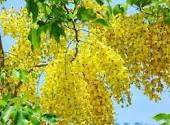
Which is the most colorful and nostalgic moment everyone in gramam loves to remember?  Surely it is the time of pooram and vishu, the memories of which will take you off to your childhood days. The nature will be in full bloom - the kani konna will be in glittering gold and the chembakams will be fully opened. The distant noise of crackers will tell you of the impending vishu. The vacations are on and for two months we are not expected to attend the boring classes. Everyone will find out ways  to collect maximum possible money for purchasing crackers. Money for crackers form elders is unthinkable and so cashew nuts which are in plenty proved to be the best option for money. 

Poorotsavam in Malabar has an entirely different connotation. Elsewhere pooram is synonymous with thrissur pooram. Here Pooram is a fertility festival.
All the temples with mother deities celebrate this festival of the spring. In all homes young girls nearing puberty will invocate kama, the god of love with gaiety. Pooram starts from karthika to pooram in the month of meenam. On these days young girls make an idol of kama in flowers in their kottilakam with awe and respect, give water and fire to it periodically under the supervision of elders. On the last day they bid farewell to Kaman. They earnestly request  him to visit them early next yearsinging
  nerathe kalathe varane kama.

There will be a feast with poorakanhi and poora ada.
          In kavus, the ritual is followed by drum beats and the deity is immersed in the holy pond on the last day. There will be a poorakkali and maruthukali in all the kavus.  In ashtamachal Bhagavathi temple in theru the ritual is very symbolic. All the village folk assemble before the sanctum sanctorum and the men folk perform a poorakkali with a beautiful song which runs like this
                       Poopparikkan poyakanni
Pookkandu, poomaram kandu
avidavide thamasichu
Then they proceed to madathumpadi temple for the holy ablutions with the four deities on decorated wooden horses. After the team return in the evening, there is keleepathram , ayyakkapodi and thidambu nritham. On the last day there is saliya porattu which is a sarcastic criticism of society pronounced in a somewhat vulgar language. The entire ritual can be conceived as a fertility cult resembling kodungallur bharani. 


Saturday, March 2, 2013

PAYYANUR KOLKALI


                      Payyanur Kolkali will enthrall anyone interested in folk culture. It is not a replica of mappila kolkali or other kolkali forms elsewhere. It is unique. It can even be termed classical as the songs and the rhythms resemble karnatic music. It requires a lot of acrobatic skills as kolkli is a prelude to kalarippayattu. The disciples of kalirippayattu requires the sharpness and alertness of body which is inculcated to the young disciples through a series of kolkli performance. In kolkali, the players are provided with two small sticks (made up of Kara) fitted with steel bangles. When they are struck together they make a musical note. The players assemble in a circle. 

There should be a minimum of 16 players. The players are grouped into two types - the aka, meaning those inside and the pura, meaning those inside. The kurikkal and the singers will occupy positions outside this circle. They dance according to a sett rhythm sung by the singers and echoed by the players in unison. There are plays which have to be played in a sitting position then in a standing position and finally in a moving position. While the pay progresses the kurikal utters talams loudly like munifo po (meaning Move forward) madakkam po (meaning go backwards etc) . The play ends with a vaithari thalam. There are some 50 different varieties of  play but usually some twenty are  played. In olden times there used to be kolkali on all festivals like nira, puthari etc at Payyanur temple. There, beneath the erinhi tree the first play is enacted as an offering to lord Subramhanya. 


 The kolkai songs are melodious and are usually invocation to gods. Kalasappattu by Anidil Ezhuthachan is a classic work which appears to be penned down solely for kolkali. Kalasappattu describes the brahma kalasam at payyanur temple in Malayalam era 1002. The temple which was completely destroyed in fires during tippu’s carnage was rebuilt by an anderjanam of thazhakkattumana and the song describes the various rituals of the celebrations in connection with the renovation of the temple.


                  The charad kuthi kali is the most attractive item in Kolkali. Here a pole is erected at the centre of the playground. Atop the pole a circular disc is attached from which coloured strings are tied down. The other ends of these strings are tied to the little finger of all players. While playing, the strings intersect each other forming a fine net. When the net is complete, the play is reversed and the same song is repeated. Exactly when the song  ends the net will be undone.  WATCH CHADUKUTHI KALI AT